Connect with us

Digital

Fapelli Explained: Meaning, Purpose, and Why It Matters in Today’s Digital World

Published

on

fapelli

In today’s fast-moving digital world, new names appear constantly, but only a few manage to capture attention, curiosity, and conversation at the same time. Fapelli is one of those names. Depending on where you see it online, it may appear as a digital lifestyle concept, a creator-focused platform, or a brand associated with creativity, modern living, and online culture. Search results also show that the name is used in multiple contexts, which makes it even more important to understand the topic clearly before writing about it for SEO purposes.

At its core, Fapelli can be presented as a modern brand idea built around style, innovation, and digital expression. That makes it a flexible topic for a strong article because it allows you to discuss branding, online identity, creativity, and the role of digital platforms in shaping how people connect with content today. A well-written article about Fapelli should not only define the term but also explain why it attracts interest, how it fits into modern online culture, and what makes it relevant in a crowded digital environment.

What Fapelli Represents

Fapelli represents more than just a name. In the digital space, names become powerful when they carry identity, emotion, and a sense of direction. The way Fapelli is described across online sources suggests a concept tied to creativity, visual presentation, community, and a polished modern image. Some pages present it as a platform for entertainment and creator content, while others describe it as a lifestyle or fashion-oriented brand. That variety shows that the name is being used as a flexible digital label, which can be shaped into different forms depending on the audience and purpose.

This is one reason Fapelli can be a strong SEO topic. Search users often want clarity, and when a term has multiple online meanings, a good article can become the place where readers finally understand it. The key is to explain the idea in a simple but confident way. Instead of treating Fapelli as a vague trend, it is better to describe it as a modern digital identity that blends creativity, branding, and contemporary online experiences. That approach keeps the article useful while also helping it rank for broader informational searches.

Why Fapelli Attracts Attention Online

One of the strongest reasons Fapelli stands out is that it sounds premium, memorable, and brand-friendly. In digital marketing, a name that feels unique can create curiosity before a reader even knows what the brand does. Fapelli has that kind of quality. It feels modern, stylish, and adaptable, which makes it suitable for a brand identity, a content platform, or a creative project. This is especially valuable in an online environment where people are constantly scanning for something fresh, polished, and different.

Another reason the name gets attention is that it fits the broader trend of lifestyle and creator-driven content. Search results show Fapelli being connected to digital living, visual storytelling, fashion expression, and creator communities, which means it sits at the intersection of culture and content. That intersection matters because online audiences are no longer interested only in information; they also want taste, identity, and a sense of belonging. A brand like Fapelli can appeal to that desire by offering an experience that feels curated rather than generic.

Fapelli as a Digital Brand Concept

If you look at Fapelli through the lens of branding, the most important idea is consistency. Strong digital brands usually succeed because they deliver a clear message, a recognizable tone, and a visual identity that people remember. Fapelli works well in that space because the name itself feels refined and contemporary. That makes it suitable for use in articles about online lifestyle, creative platforms, brand storytelling, modern commerce, or content-driven communities. The more consistent the message becomes, the easier it is for users and search engines to understand the topic.

A brand like Fapelli can also be discussed in terms of trust and presence. When people encounter a new digital brand, they usually ask a few simple questions: What is it? Who is it for? Why does it matter? How is it different? A good article should answer those questions clearly and naturally. If you write about Fapelli as a platform that blends creativity, modern style, and digital experiences, the article gains structure and authority. That structure is exactly what search readers and search engines both tend to favor.

The Role of Style, Creativity, and Community

Style plays a major role in how digital brands grow, and Fapelli fits neatly into that discussion. Search results link the name with fashion, expression, and creative storytelling, which suggests that visual appeal is part of its identity. In modern online culture, style is not just about appearance; it is also about communication. It tells people what kind of experience to expect, what kind of audience the brand serves, and what values it represents. That is why the style dimension of Fapelli should be described as a meaningful part of its appeal rather than a decorative detail.

Community is just as important. Today’s most effective digital brands are not built in isolation. They grow through interaction, sharing, discussion, and participation. Fapelli can be positioned as part of that larger shift toward community-centered content. Whether a reader sees it as a creator platform, a lifestyle hub, or a digital expression brand, the common thread is the same: it belongs to a culture where people want to connect with ideas that feel personal, current, and visually engaging. That sense of connection gives the topic depth and helps the article feel relevant instead of generic.

Why Fapelli Is a Good SEO Topic

From an SEO perspective, Fapelli is a strong topic because it creates room for both informational and brand-focused search intent. People may search the term because they want to know what it means, because they saw it on social media, or because they want to understand the project behind the name. That makes it useful for content that answers beginner questions while also giving enough detail for readers who want more context. Search-friendly articles do best when they meet users at the exact stage of curiosity they are in, and Fapelli is the kind of keyword that supports that strategy well.

The best way to optimize an article around Fapelli is to keep the writing clear, natural, and centered on meaning. Use the primary keyword in the title, the introduction, one or two subheadings, and the conclusion. Then support it with related phrases such as digital lifestyle, online presence, creator platform, modern branding, creative expression, and visual identity. This creates semantic depth without sounding forced. Readers stay engaged because the article feels useful, and search engines understand the topic because the language is consistent and relevant.

Conclusion

Fapelli is best understood as a modern digital concept with strong potential as a brand, platform, or lifestyle identity. Its appeal comes from a mix of style, creativity, and online relevance, which makes it useful for content that explores branding, community, and digital culture. Because the name appears in multiple online contexts, the smartest way to write about it is to focus on the shared themes that appear across those descriptions: innovation, visual identity, and modern online presence.

For SEO, this is actually an advantage. A flexible keyword like Fapelli allows you to build an article that is informative, polished, and easy to expand. With the right structure, a clear title, a strong introduction, detailed body sections, and a thoughtful conclusion, you can create content that feels authoritative and attractive to readers. When the topic is presented in a clear and valuable way, it becomes much easier for the article to earn visibility and trust.

FAQ

1. What is Fapelli?

Fapelli appears online as a name used in more than one context, including digital lifestyle, creator content, fashion, and modern brand identity.

2. Is Fapelli a brand or a platform?

Search results show it being described both ways, which suggests it is being used as a flexible digital brand term rather than a single fixed concept.

3. Why is Fapelli good for SEO?

It is good for SEO because it is unique, curiosity-driven, and broad enough to support informational content, branding content, and digital culture topics.

4. What keywords should I use with Fapelli?

Useful keywords include Fapelli, digital lifestyle, creator platform, online presence, modern branding, creativity, visual identity, and digital culture. These terms match the themes seen in online descriptions of the topic.

5. How should I write a ranking article about Fapelli?

Use a clear SEO title, define the term early, explain its digital and creative relevance, write long and natural paragraphs, and end with a conclusion and FAQ that answer the reader’s most likely questions.

6. Can I use this article as-is?

Yes, but the best results come from adding your own brand angle, audience focus, and internal linking strategy so the article feels more original and targeted.

Continue Reading

Digital

Buffer Login: Complete Guide to Secure Buffer Account Login, Sign In, Troubleshooting, and Account Recovery (2026)

Published

on

buffer login

Buffer is one of the most trusted social media management platforms used by businesses, marketers, creators, agencies, and entrepreneurs to schedule posts, manage multiple social media accounts, collaborate with teams, and analyze content performance. Since social media marketing has become an essential part of online business growth, having uninterrupted access to your Buffer account is extremely important. Whether you manage a single brand or multiple clients, logging into your Buffer account quickly and securely helps you stay productive and maintain your publishing schedule without delays. Many users search for terms such as Buffer login, Buffer account login, Buffer sign in, Buffer dashboard login, and Buffer password reset when they need assistance accessing their accounts. This comprehensive guide explains everything you need to know about logging into Buffer, solving common login problems, securing your account, and recovering access if you forget your credentials.

What Is Buffer?

Buffer is a cloud-based social media management platform that allows users to publish, schedule, and organize content across several major social media networks from one centralized dashboard. Instead of logging into each social platform separately, users can connect their accounts to Buffer and manage everything from one place. The platform also provides analytics, collaboration tools, AI-powered content assistance, and planning features that simplify social media marketing. Because Buffer stores valuable marketing data, maintaining secure account access through the Buffer login portal is essential for both individuals and organizations.

Buffer Login Overview

The Buffer login page is the official gateway where users securely access their accounts. Once signed in, users can schedule social media posts, review analytics, manage connected channels, collaborate with team members, update account settings, and monitor publishing performance. Logging in requires your registered email address and password, or you may choose supported single sign-on methods if available on your account. Always use the official login page and avoid entering your credentials on unofficial websites to protect your account.

How to Login to Your Buffer Account

Logging into Buffer is a straightforward process. Begin by opening your preferred web browser and visiting the official Buffer website. Select the Log In option, enter the email address associated with your account, type your password carefully, and submit your credentials. If your account has two-factor authentication enabled, you will also need to verify your identity using the authentication code sent to your trusted device or authentication application. After successful verification, you will be redirected to your Buffer dashboard where you can begin managing your social media accounts immediately.

Buffer Login Features

One of the reasons Buffer remains popular is its simple yet secure login experience. The login system supports secure encrypted connections, password protection, account recovery options, session management, and optional two-factor authentication for enhanced security. Users can access their accounts from desktop browsers as well as supported mobile devices, making it convenient to manage social media campaigns from virtually anywhere. These features help reduce unauthorized access while providing a seamless sign-in experience for legitimate users.

Common Buffer Login Problems

Although Buffer offers a reliable login system, users occasionally experience difficulties signing into their accounts. The most common issue is entering an incorrect email address or password. Forgotten passwords are another frequent cause of login failures, especially for users who have not signed in for an extended period. Browser cache, outdated cookies, disabled JavaScript, browser extensions, or network connectivity problems can also interfere with the login process. In some cases, users may temporarily lose access because of account verification requirements or security measures triggered after unusual login activity. Carefully reviewing your credentials, clearing browser data, or trying another browser often resolves these issues.

How to Reset Your Buffer Password

If you forget your password, Buffer provides an easy password recovery process. Navigate to the login page and choose the password reset option. Enter the email address associated with your account and submit the request. Buffer will send a secure password reset email containing instructions for creating a new password. Follow the link promptly, choose a strong password that combines uppercase letters, lowercase letters, numbers, and special characters, and avoid reusing passwords from other websites. Once your password has been updated successfully, return to the login page and sign in with your new credentials.

Buffer Login Security Tips

Protecting your Buffer account is essential because it may have access to multiple connected social media platforms. Always create a unique password that is difficult to guess and avoid sharing your login information with anyone. Enable two-factor authentication whenever available, log out from shared or public computers after every session, and regularly review connected devices for suspicious activity. Avoid clicking unknown links requesting your Buffer credentials, and only access the official login page. Keeping your browser and operating system updated further improves security by reducing vulnerabilities that attackers may exploit.

Benefits of Having a Buffer Account

A Buffer account offers much more than simple post scheduling. Users can organize content calendars, publish posts across multiple social platforms, collaborate with teammates, review analytics, monitor campaign performance, and improve marketing efficiency from one centralized dashboard. Businesses appreciate Buffer because it saves time, increases consistency, and streamlines social media workflows. Once logged in, users gain access to a wide range of productivity features designed to support effective digital marketing.

Tips for Faster Buffer Login

For users who access Buffer daily, there are several ways to make the login process more efficient without compromising security. Save the official login page as a browser bookmark, use a trusted password manager to securely store credentials, keep two-factor authentication devices accessible, and maintain updated browser software. Avoid using public Wi-Fi without a secure connection, and periodically review your account settings to ensure your recovery email and contact information remain accurate. These habits help reduce login delays while maintaining strong account protection.

Why Users Search for Buffer Login

People search for the term Buffer login for various reasons. Some want direct access to the sign-in page, while others need help recovering forgotten passwords or resolving account access issues. Businesses managing multiple social profiles may search for login instructions after creating new team accounts, while marketers often seek troubleshooting guidance when authentication errors occur. Understanding these different search intents allows website owners to create comprehensive content that addresses both informational and navigational needs, improving user satisfaction and search engine visibility.

Conclusion

The Buffer login portal serves as the secure entry point for accessing one of the most widely used social media management platforms available today. Whether you manage personal social accounts, business brands, or multiple client profiles, understanding how to log in securely, recover your account, troubleshoot common sign-in issues, and protect your credentials is essential for maintaining uninterrupted access to your marketing tools. By following the best practices outlined in this guide—including using strong passwords, enabling two-factor authentication, and accessing only the official login page—you can significantly reduce security risks while enjoying a smooth and reliable sign-in experience. This complete Buffer login guide provides the information users need to confidently access their accounts and manage social media more effectively.

Frequently Asked Questions (FAQs)

1. What is Buffer Login?

Buffer Login is the secure sign-in process that allows users to access their Buffer account and manage connected social media platforms from one dashboard.

2. How do I log into my Buffer account?

Visit the official Buffer website, select the login option, enter your registered email address and password, complete any required verification steps, and access your dashboard.

3. What should I do if I forget my Buffer password?

Use the password reset option on the login page, enter your registered email address, follow the reset instructions sent by email, create a new password, and log in again.

4. Why is my Buffer login not working?

Possible reasons include incorrect credentials, forgotten passwords, browser cache issues, expired sessions, internet connectivity problems, or additional security verification requirements.

5. Is Buffer login secure?

Yes. Buffer uses secure encrypted connections and supports additional security measures such as two-factor authentication to help protect user accounts.

6. Can I access Buffer from my mobile device?

Yes. Buffer can be accessed through supported mobile browsers and official mobile applications, allowing users to manage their accounts while on the go.

7. How can I keep my Buffer account secure?

Use a strong unique password, enable two-factor authentication, avoid phishing websites, keep your browser updated, and sign out from shared devices after use.

8. Does Buffer support multiple social media accounts?

Yes. Buffer allows users to connect and manage multiple supported social media profiles from a single account, making it easier to schedule content and monitor performance.

Continue Reading

Digital

Google Maps Glasgow: The Complete Guide to Navigating Scotland’s Largest City

Published

on

google maps glasgow

Whether you are visiting Glasgow for the first time, moving to the city, or simply planning your daily commute, Google Maps Glasgow is one of the most valuable digital tools available. It provides real-time navigation, live traffic updates, walking directions, cycling routes, public transport information, and detailed maps of every neighborhood in Scotland’s largest city. From exploring the bustling streets of Glasgow City Centre to discovering peaceful parks, famous museums, shopping districts, and local restaurants, Google Maps makes travelling easier and more efficient than ever before.

Glasgow is a vibrant destination known for its rich history, world-class architecture, thriving music scene, prestigious universities, and friendly atmosphere. Every year millions of tourists and local residents rely on Google Maps to navigate through busy streets, locate businesses, compare travel options, and discover new places. This comprehensive guide explains everything you need to know about using Google Maps in Glasgow, including its best features, practical travel tips, offline maps, public transportation guidance, and ways to maximize your experience while exploring the city.

What Is Google Maps Glasgow?

Google Maps Glasgow simply refers to using Google Maps to explore, navigate, and search locations throughout Glasgow. The service combines satellite imagery, street maps, live traffic data, user reviews, business listings, and GPS navigation into one platform. Whether accessed through a smartphone, tablet, or desktop browser, it allows users to find destinations quickly while receiving accurate turn-by-turn directions.

Unlike traditional paper maps, Google Maps continuously updates road closures, traffic congestion, construction zones, business hours, and public transportation schedules. This dynamic information helps travelers make informed decisions before beginning their journey.

Why Google Maps Is Essential in Glasgow

Glasgow is one of the busiest cities in Scotland, featuring extensive road networks, pedestrian shopping streets, railway stations, subway lines, bus services, and cycling routes. Navigating such a large urban environment without digital assistance can be challenging, particularly for visitors unfamiliar with local roads.

Google Maps simplifies navigation by calculating the fastest route based on current traffic conditions. It also suggests alternative routes when delays occur, helping commuters save valuable time. Visitors benefit from recommendations for nearby attractions, restaurants, hotels, fuel stations, pharmacies, and parking facilities, making it easier to plan an enjoyable trip without unnecessary stress.

Major Places You Can Explore Using Google Maps Glasgow

One of the biggest advantages of Google Maps is its detailed coverage of Glasgow’s most popular destinations. Travelers can locate famous landmarks, shopping centres, entertainment venues, educational institutions, and cultural attractions within seconds.

Popular places commonly searched include George Square, Buchanan Street, Glasgow Cathedral, Kelvingrove Art Gallery and Museum, Riverside Museum, Glasgow Green, the University of Glasgow, SEC Centre, OVO Hydro, and the Botanic Gardens. The platform provides reviews, photos, opening hours, accessibility information, and directions for each destination, making trip planning much easier.

Finding the Fastest Routes

Google Maps automatically calculates the fastest available route based on live traffic conditions. Whether you’re driving from Glasgow Airport to the city centre or walking between tourist attractions, the application analyzes multiple routes before recommending the most efficient option.

For drivers, estimated arrival times continuously update during travel. If congestion develops, Google Maps immediately suggests alternative roads that may reduce travel time. This feature is particularly useful during rush hour when major roads become heavily congested.

Walking Around Glasgow

Many visitors prefer exploring Glasgow on foot because numerous attractions are located within walking distance of one another. Google Maps provides detailed pedestrian navigation, including sidewalks, crossings, stairways, pedestrian-only streets, and estimated walking times.

Walking directions are especially useful when exploring Buchanan Street, Merchant City, Glasgow Green, or the West End, where driving may be less convenient.

Public Transport Navigation

Glasgow offers an extensive public transport network consisting of buses, trains, and the famous Glasgow Subway. Google Maps integrates public transport schedules to provide accurate journey planning.

Users can compare travel times, identify transfer stations, receive departure schedules, and estimate arrival times. This feature is particularly valuable for tourists unfamiliar with local transportation systems, allowing them to confidently navigate the city without renting a vehicle.

Live Traffic Updates

Traffic conditions change throughout the day due to roadworks, accidents, sporting events, concerts, and weather conditions. Google Maps displays live traffic using color-coded roads, helping drivers avoid delays.

Real-time traffic information improves route planning while reducing travel time and fuel consumption. During busy commuting hours, these updates become especially valuable.

Offline Maps for Glasgow

One of the most useful features is offline map downloading. Travelers can save Glasgow maps directly to their smartphones before arriving in the city.

Offline maps allow navigation even without mobile data or Wi-Fi. While some live features become unavailable, users can still search roads, locate saved places, and receive basic driving directions.

Discovering Local Businesses

Google Maps functions as a local business directory. Users can quickly locate nearby restaurants, hotels, coffee shops, supermarkets, pharmacies, banks, shopping centres, and petrol stations.

Each listing often includes customer reviews, ratings, business hours, phone numbers, photos, and accessibility details. These insights help users choose the best places to visit based on real customer experiences.

Street View in Glasgow

Street View offers panoramic imagery of many Glasgow streets, allowing users to preview destinations before visiting. This feature is particularly useful for identifying building entrances, parking areas, landmarks, and nearby intersections.

Students visiting university campuses, tourists exploring attractions, and drivers navigating unfamiliar neighborhoods all benefit from this visual guidance.

Parking with Google Maps

Finding parking in busy areas can be difficult. Google Maps helps users identify nearby parking garages and lots, reducing time spent searching for available spaces. Reviews and location information can also help compare different parking options.

Tips for Using Google Maps Glasgow More Effectively

To get the best experience, keep the application updated to access the latest map improvements and navigation features. Save frequently visited locations such as your hotel, workplace, or favorite restaurants for quick access. Download offline maps before traveling if you expect limited internet connectivity. Enable location services for more accurate directions and estimated travel times. Reading user reviews before visiting attractions or restaurants can also help you make better decisions during your trip.

Common Uses of Google Maps in Glasgow

Residents use Google Maps daily for commuting to work, locating businesses, checking traffic, and planning errands. Tourists rely on it for sightseeing, discovering restaurants, booking accommodations, and navigating public transport. Students use it to find university buildings, libraries, cafés, and accommodation, while business travelers depend on it to reach meetings efficiently and explore nearby services.

Advantages of Google Maps Glasgow

Google Maps combines convenience, accuracy, and real-time information in a single application. Its ability to provide live traffic updates, public transport schedules, walking routes, business information, offline maps, and Street View makes it an indispensable companion for anyone traveling through Glasgow. Whether planning a short visit or living in the city long term, the platform saves time, reduces stress, and helps users confidently navigate unfamiliar areas.

Conclusion

Google Maps Glasgow has transformed how people explore Scotland’s largest city. Instead of relying on static maps or asking for directions, users can access real-time navigation, traffic information, public transportation schedules, business listings, and detailed location data from virtually anywhere. Its powerful features make traveling easier for tourists, commuters, students, and local residents alike.

Whether you want to discover famous landmarks, locate the best restaurants, avoid traffic congestion, or simply find the fastest route across town, Google Maps provides a reliable and user-friendly solution. By taking advantage of features like offline maps, Street View, live traffic monitoring, and personalized route planning, you can enjoy a smoother and more enjoyable experience while exploring everything Glasgow has to offer.

Frequently Asked Questions (FAQ)

1. What is Google Maps Glasgow?

Google Maps Glasgow refers to using Google Maps to navigate, explore, and locate places throughout Glasgow, Scotland.

2. Can I use Google Maps offline in Glasgow?

Yes. You can download the Glasgow map in advance and use it without an internet connection for many navigation features.

3. Does Google Maps show Glasgow public transport?

Yes. It includes routes, schedules, estimated travel times, and transfer information for buses, trains, and the Glasgow Subway.

4. Is Google Maps accurate for driving in Glasgow?

Yes. It provides turn-by-turn navigation, live traffic updates, and alternative routes based on current road conditions.

5. Can I find restaurants and hotels on Google Maps Glasgow?

Absolutely. Google Maps lists restaurants, hotels, cafés, shops, and many other businesses along with reviews, ratings, photos, and opening hours.

6. Does Google Maps include walking routes?

Yes. It offers pedestrian-friendly directions with estimated walking times and suggested routes.

7. Is Street View available in Glasgow?

Yes. Many streets and landmarks in Glasgow are covered by Street View, allowing users to preview locations before visiting.

8. Is Google Maps free to use?

Yes. Google Maps is free for users on both desktop and mobile devices, though mobile data charges may apply if you’re not using Wi-Fi or offline maps.

Continue Reading

Digital

OutlookIndia Careers: Complete Guide to Jobs, Hiring Process, Eligibility, Skills, and Career Opportunities
Published

on

outlookindia careers

OutlookIndia Careers has become a popular search term among job seekers who are interested in working in the digital media, journalism, publishing, editorial, technology, marketing, and business sectors. As one of India’s recognized news and media platforms, Outlook India attracts professionals from diverse educational and professional backgrounds who want to build meaningful careers in modern media and digital publishing.

Whether you are a recent graduate, an experienced journalist, a software developer, a digital marketer, a content writer, a graphic designer, or someone looking for corporate opportunities, understanding how OutlookIndia Careers works can help you prepare effectively before applying. Like many established media organizations, the company values professional skills, creativity, ethical standards, teamwork, communication abilities, and a willingness to adapt to the rapidly changing digital landscape.

This guide explains everything about OutlookIndia Careers, including available job roles, qualifications, hiring procedures, application methods, interview preparation, workplace culture, employee benefits, salary expectations, career growth opportunities, and practical tips that can improve your chances of securing a suitable position.

What is Outlook India?

Outlook India is a well-known Indian news and current affairs publication that covers politics, business, technology, entertainment, sports, lifestyle, education, travel, health, finance, and many other topics. Over the years, the organization has expanded from traditional print journalism into digital publishing, making online content a significant part of its operations.

Because digital publishing requires professionals from multiple disciplines, career opportunities extend far beyond journalism. Technical teams maintain websites and digital platforms, marketing professionals manage audience growth, designers create visual experiences, and business teams oversee operations, partnerships, and advertising.

Why Consider OutlookIndia Careers?

Many professionals choose media organizations because they provide dynamic work environments where every day presents new challenges and learning opportunities. Working in digital publishing allows employees to gain experience in content strategy, audience engagement, multimedia production, data analysis, and emerging technologies.

A career with a respected media organization can also strengthen a professional portfolio by offering exposure to large-scale publishing workflows, editorial standards, collaborative teamwork, and digital innovation. Employees often have opportunities to work alongside experienced editors, writers, developers, designers, and business professionals, creating an environment that encourages continuous learning and professional development.

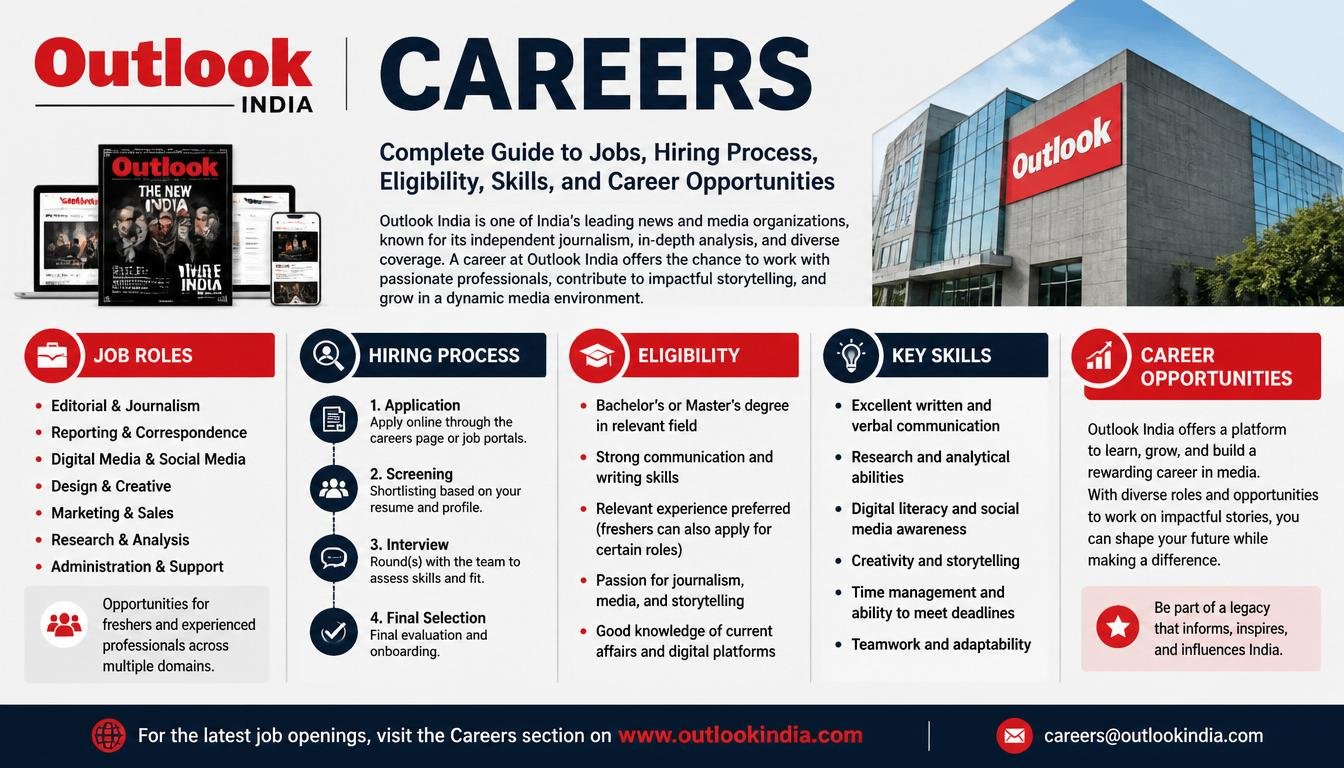
Popular Job Roles in OutlookIndia Careers

OutlookIndia Careers may include opportunities across editorial, technical, creative, marketing, and business functions depending on organizational needs.

Common positions include:

  • Content Writer
  • News Reporter
  • Journalist
  • Copy Editor
  • Sub Editor
  • Senior Editor
  • SEO Specialist
  • Digital Marketing Executive
  • Social Media Manager
  • Graphic Designer
  • Video Editor
  • Photographer
  • UI/UX Designer
  • Software Developer
  • Web Developer
  • Mobile Application Developer
  • Product Manager
  • Data Analyst
  • HR Executive
  • Sales Executive
  • Advertising Manager
  • Customer Support Executive
  • Administrative Staff

Each role requires different qualifications, experience levels, and technical expertise.

Educational Qualifications

Educational requirements depend largely on the specific department. Editorial positions often prefer degrees in journalism, mass communication, English, political science, or related disciplines. Technology positions typically require backgrounds in computer science, information technology, or software engineering. Marketing roles often seek candidates with education in marketing, business administration, communications, or digital media.

However, practical experience, professional portfolios, certifications, internships, and demonstrated skills may significantly strengthen an application regardless of academic background.

Skills Required

Successful candidates often possess a combination of technical expertise and interpersonal abilities.

Important skills include:

  • Excellent communication
  • Strong writing ability
  • Research skills
  • Critical thinking
  • Problem solving
  • SEO knowledge
  • Digital marketing
  • Data analysis
  • Time management
  • Creativity
  • Team collaboration
  • Adaptability
  • Project management
  • Technical proficiency
  • Ethical decision-making

Professionals who continuously improve these skills generally become stronger candidates for media industry positions.

OutlookIndia Careers Hiring Process

Although hiring procedures can vary depending on the position, a typical recruitment process generally follows several stages.

The first stage involves submitting an online application with a resume, portfolio, and any required supporting documents. Recruiters then review applications to determine whether applicants meet the required qualifications and experience. Shortlisted candidates may be invited to complete writing assessments, technical evaluations, design assignments, or aptitude tests depending on the role.

Following successful assessments, candidates usually participate in one or more interviews with hiring managers, department leaders, or human resources representatives. Interview discussions often evaluate professional experience, communication abilities, problem-solving approaches, industry knowledge, and alignment with organizational values. After completing the evaluation process, successful candidates may receive an employment offer, followed by background verification and onboarding procedures.

Salary Expectations

Compensation varies based on experience, department, geographic location, responsibilities, and organizational requirements. Entry-level positions generally receive lower salaries than experienced professionals, while specialized technical, editorial, and leadership roles typically command higher compensation.

In addition to salary, organizations may offer performance incentives, professional development programs, paid leave, insurance benefits, flexible work arrangements, and other employment benefits depending on company policies.

Employee Benefits

Employees working in modern media organizations often enjoy a range of professional benefits designed to support career development and workplace satisfaction. These benefits may include structured onboarding programs, continuous learning opportunities, professional training sessions, collaboration with experienced industry professionals, exposure to innovative technologies, health-related benefits, paid leave, performance recognition programs, and opportunities for internal career advancement. Some roles may also provide hybrid or flexible working arrangements based on business requirements and organizational policies.

Career Growth Opportunities

One of the major advantages of building a career within a media organization is the opportunity for continuous learning and professional advancement. Employees who consistently demonstrate strong performance, leadership qualities, creativity, and technical expertise may progress into senior editorial positions, department management, product leadership, digital strategy, or executive roles over time.

Career progression often depends on performance, contribution to organizational objectives, willingness to learn emerging technologies, and the ability to collaborate effectively with cross-functional teams. Developing expertise in areas such as artificial intelligence, multimedia storytelling, search engine optimization, audience analytics, and digital product management can further enhance long-term career prospects within the media industry.

Tips for Getting Hired

Applicants can improve their chances by preparing thoroughly before applying. Maintaining a well-structured resume, creating a professional portfolio that showcases relevant work, strengthening communication skills, practicing interview questions, researching the organization’s publications and editorial standards, and continuously updating technical knowledge are all valuable preparation strategies. Candidates should also tailor each application to the specific position, highlighting relevant achievements, certifications, and measurable accomplishments rather than submitting the same generic resume for every role.

Common Challenges

Working in digital media can be both rewarding and demanding. Professionals may encounter tight publication deadlines, rapidly changing news cycles, evolving technology, competitive industry standards, and the need to maintain high levels of accuracy and ethical responsibility. Success often requires resilience, adaptability, effective collaboration, and a commitment to continuous professional development.

Final Thoughts

OutlookIndia Careers offers opportunities across editorial, technology, marketing, design, business, and operational functions for individuals who are passionate about contributing to the evolving world of digital media. While available positions and hiring requirements may vary over time, candidates who invest in developing relevant skills, building professional portfolios, and preparing carefully for the recruitment process can significantly improve their employment prospects. Whether you are beginning your professional journey or seeking your next career move, understanding the organization’s expectations and aligning your qualifications with the desired role can help you pursue opportunities more effectively.

Conclusion

Building a successful career in the media industry requires more than academic qualifications—it demands continuous learning, adaptability, creativity, and a commitment to producing high-quality work. Understanding the OutlookIndia Careers process, including job roles, required skills, hiring procedures, and professional growth opportunities, enables applicants to prepare with greater confidence and professionalism. By developing relevant expertise, staying informed about industry trends, and presenting a strong application, candidates can position themselves competitively for future opportunities in journalism, digital publishing, technology, marketing, and related fields.

Frequently Asked Questions (FAQs)

1. What is OutlookIndia Careers?

OutlookIndia Careers refers to employment opportunities associated with Outlook India across editorial, technology, marketing, design, business, and support departments.

2. How can I apply for OutlookIndia Careers?

Candidates can monitor the organization’s official careers page or professional job platforms for current openings and follow the application instructions provided for each position.

3. What qualifications are required?

Requirements depend on the role. Editorial positions often seek journalism or communications backgrounds, while technical and business roles require relevant education and experience in their respective fields.

4. Does Outlook India hire fresh graduates?

Some entry-level roles and internships may be available depending on the organization’s hiring needs and current openings.

5. What skills are most valuable?

Strong communication, writing, research, SEO, digital marketing, technical expertise, teamwork, creativity, and problem-solving skills are commonly valued.

6. What is the hiring process like?

The process generally includes an application review, assessments (where applicable), interviews, background verification, and onboarding for selected candidates.

7. Is OutlookIndia Careers limited to journalism jobs?

No. Opportunities may exist in technology, software development, design, marketing, human resources, finance, administration, sales, and other business functions.

8. Are remote or hybrid positions available?

Work arrangements vary by role and organizational policy, so applicants should review each job posting for specific details.

9. How can I improve my chances of getting hired?

Tailor your resume to the role, maintain a strong portfolio, gain relevant experience, improve technical and communication skills, and prepare thoroughly for interviews.

10. Is OutlookIndia Careers a good choice for long-term professional growth?

For individuals interested in media, journalism, digital publishing, technology, or marketing, it can provide valuable experience and opportunities for career development, depending on the role and organizational needs.

Continue Reading

Trending